
Most people think of spring as planting season. Garden centers are full, everyone’s itching to get outside, and the first warm weekend in April sends half of Williamson County to the nursery. Here’s the truth: in Middle Tennessee, you can plant successfully any day of the year when it’s done right. Some days are better than others, and some seasons are better than others, and fall is one of the very best times to plant trees, shrubs, and perennials here.
John Hewitt has spent about sixteen years designing and planting landscapes across Franklin, Brentwood, Leiper’s Fork, College Grove, and Nashville neighborhoods like Green Hills, Forest Hills, Belle Meade, and Oak Hill. Plants that go in during the fall consistently come out ahead. Here’s why, and how to get it right.
Why Fall Is a Great Time to Plant in Middle Tennessee
A plant’s first job after going in the ground is growing roots. Fall gives it the best conditions to do that.
- Warm soil, cool air. After a long summer, the soil holds its warmth well into November. Roots keep growing until soil temperatures drop below about 45–50°F, while the cooler air means the tops are slowing down and losing less water. The plant can put its energy where it matters.
- Less heat stress. A shrub planted in May has a few weeks before it faces 95°F days and dry spells with a small root ball. A fall-planted shrub skips that first brutal summer.
- Winter and spring rains do some of the work. Our wet winters and springs keep new roots moist while they settle in, so by next June the plant has a full season of root growth behind it.
The result is a plant that looks better its first summer, needs less babysitting, and grows into the design faster.
The Fall Planting Window for Zone 7a/7b
Middle Tennessee sits in USDA Zones 7a and 7b. Franklin and most of Williamson County are on the 7a/7b line, and parts of Nashville run a little warmer. In practice, the window looks like this:
- Late September to mid-October: the best time for perennials and ornamental grasses. They need about six weeks of root growth before hard cold.
- October through November: prime time for trees, shrubs, and evergreens.
- Into early December and beyond: still a good time for balled-and-burlapped trees and container shrubs.
Our winters are mild, so planting doesn’t have to stop when the leaves fall. With the right care, trees and shrubs can go in right through winter.
What to Plant in the Fall
Shade and specimen trees
Fall is the ideal time to set the trees that anchor a design. Ones that do well here:
- Willow oak and Shumard oak for long-lived shade and dependable fall color
- Red maple cultivars like ‘October Glory’ and ‘Red Sunset’
- Blackgum (Nyssa sylvatica) for brilliant red fall color and tolerance of clay
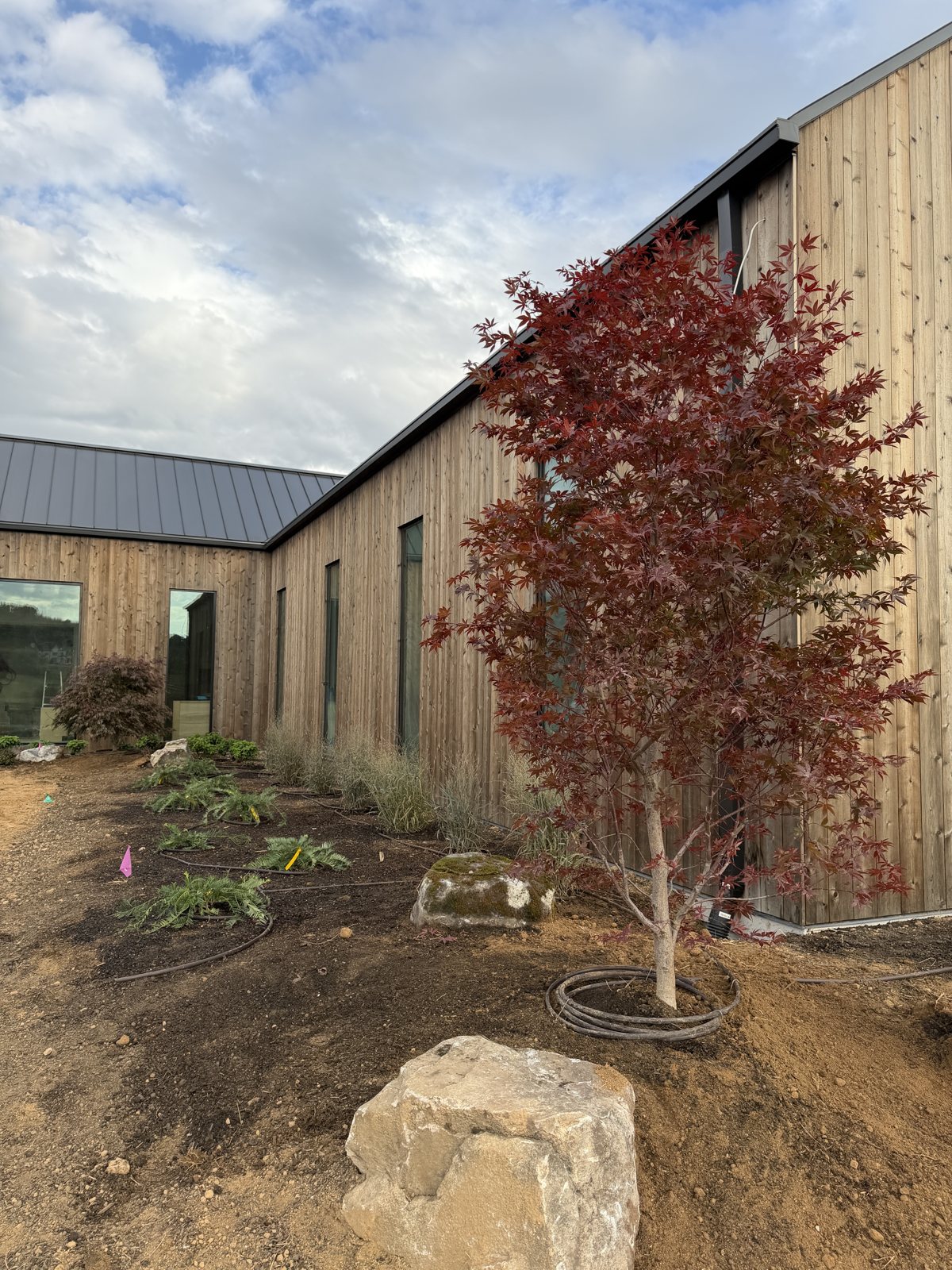
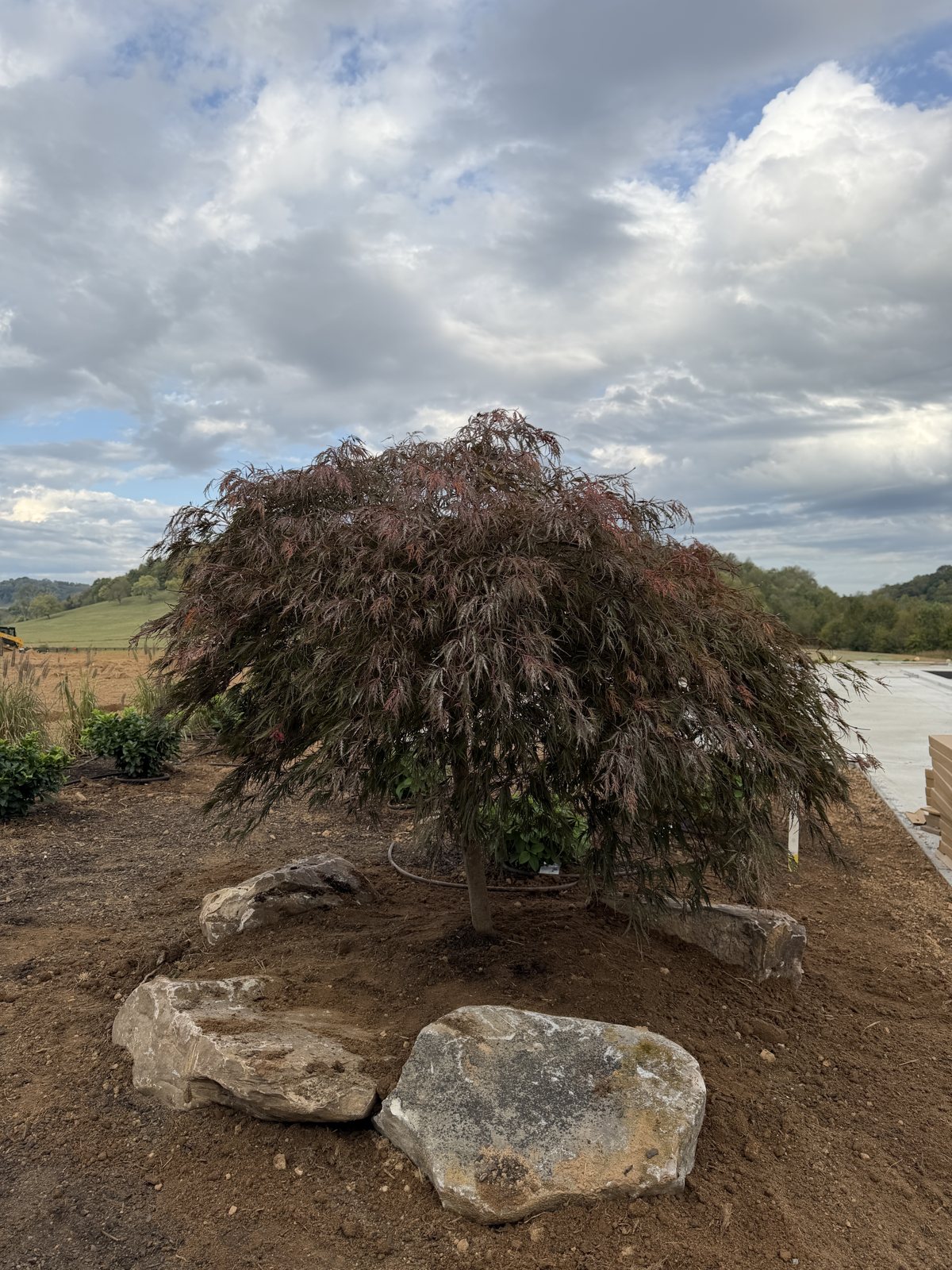
- Japanese maple as a specimen near patios and entries, sited with some afternoon shade
- Eastern redbud, serviceberry, and native dogwood as smaller flowering trees
- Southern magnolia and ‘Little Gem’ magnolia for an evergreen specimen
Evergreens for screening
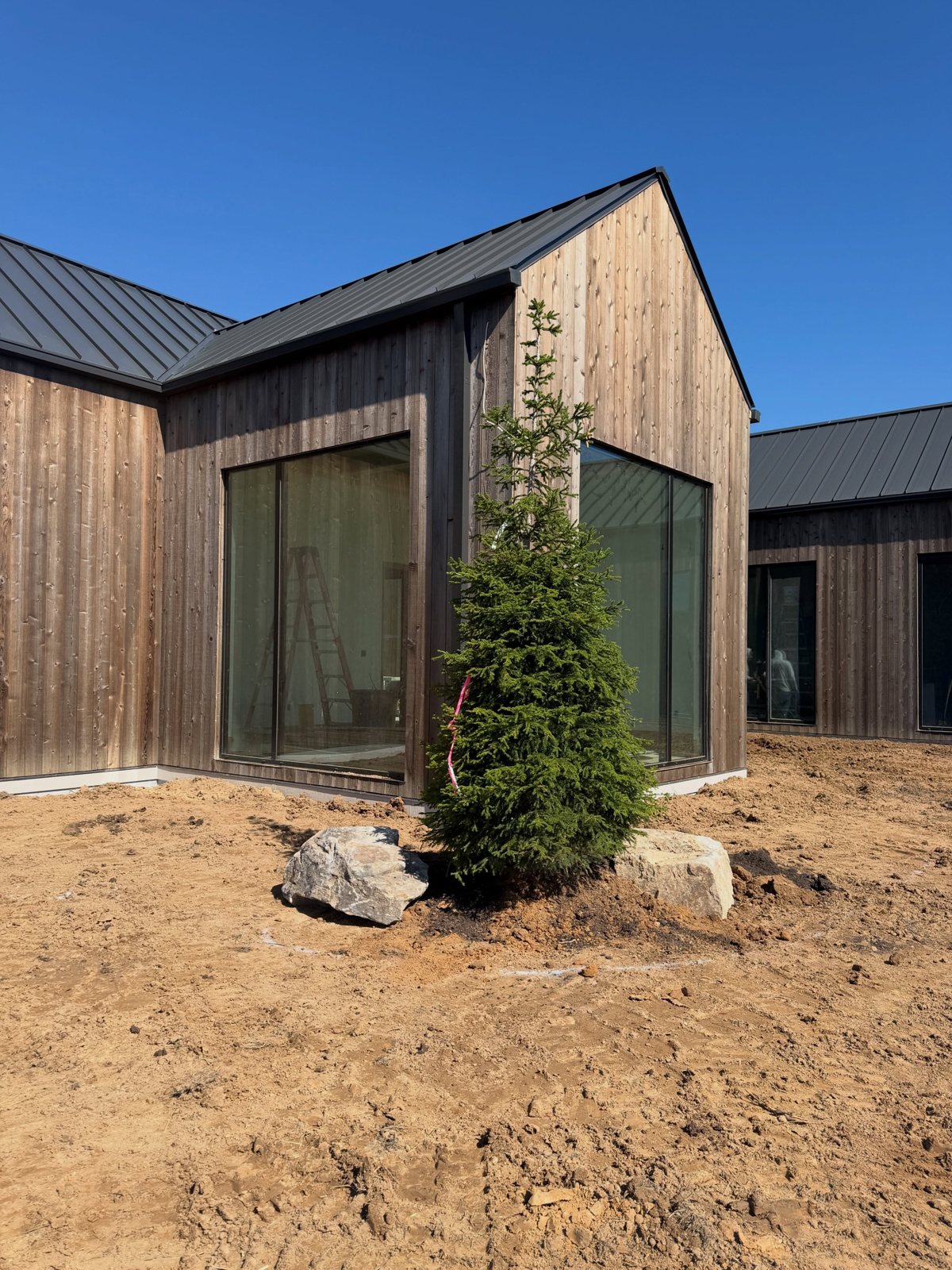
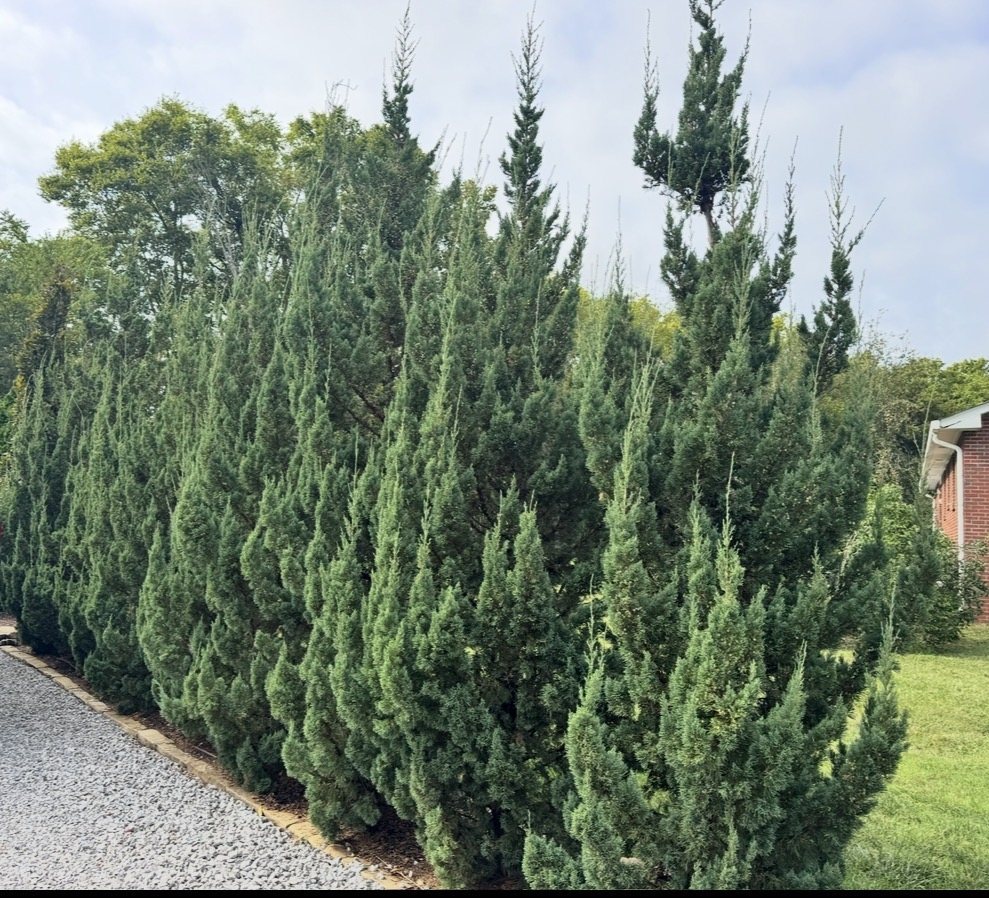
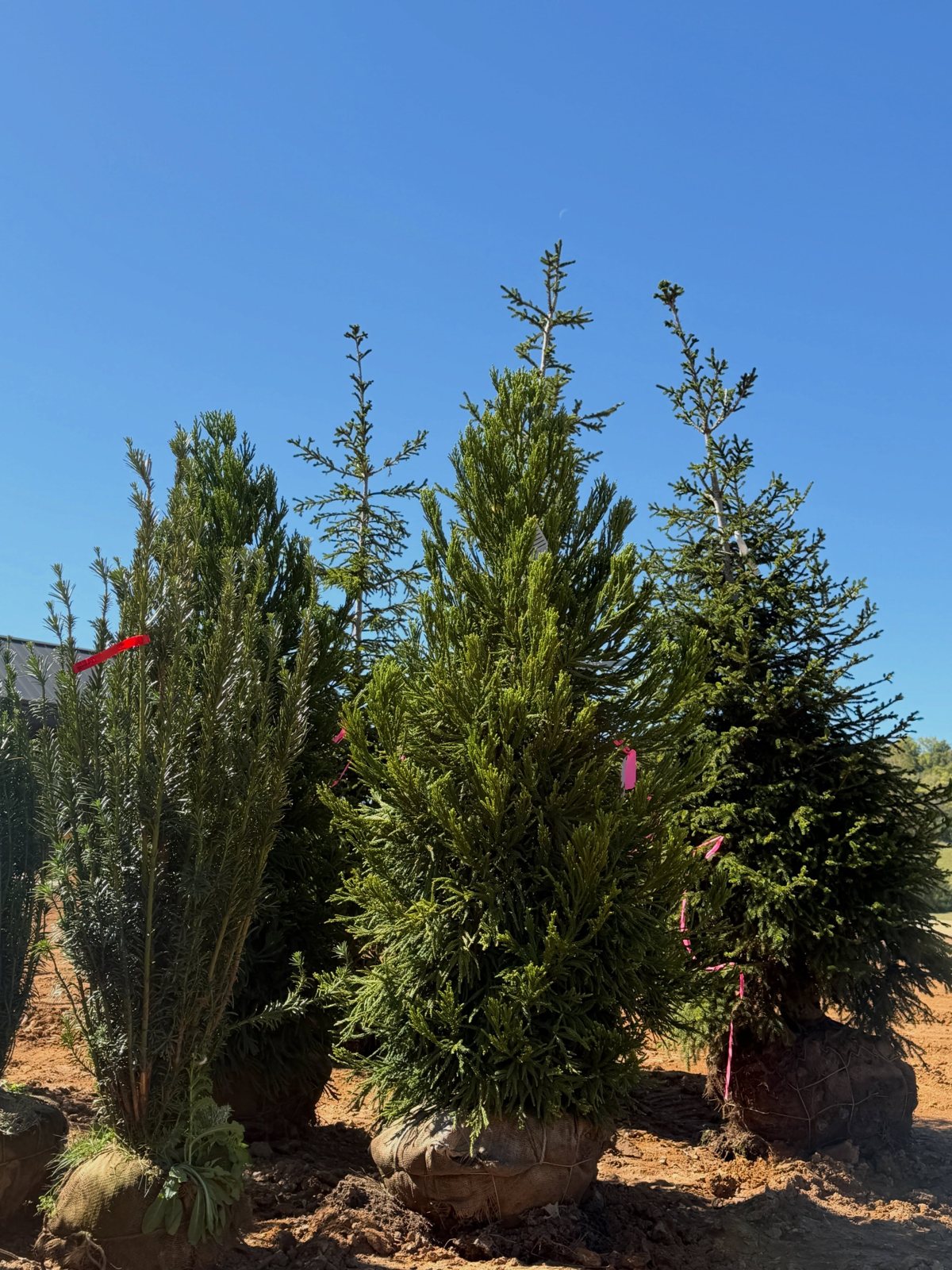
If you’re planning a privacy screen, fall is the time to get it in so it has a head start on filling in. Good choices for our clay and climate include Green Giant arborvitae, Nellie R. Stevens holly, cryptomeria, Southern magnolia, and Skip laurel where drainage is good. Matching the plant to the width you have matters as much as the plant itself. Our privacy trees guide for Franklin and Brentwood walks through skinny, medium, and large spaces.
Shrubs
Most shrubs establish beautifully in fall: hydrangeas (oakleaf, panicle types like ‘Limelight’, and smooth types like ‘Annabelle’), viburnums, inkberry and other hollies, distylium, abelia, fothergilla, Virginia sweetspire, and boxwood in spots with good air and drainage.
Hardy, long-season perennials
Plant these early in the window so they settle before cold: coneflower, black-eyed Susan, salvia ‘May Night’, catmint, sedum ‘Autumn Joy’, amsonia, hellebores, and Shenandoah or Northwind switchgrass. They’re tough in our heat, come back year after year, and give you color from spring into frost.
What to Wait On
Not everything belongs in the ground in October.
- Tender annuals and summer color like lantana, vinca, and most tropicals belong in spring after the last frost.
- Marginally hardy plants, such as some gardenias, rosemary, and certain crape myrtle selections pushing the edge of our zone, do better planted in spring so they have a full season before their first winter.
- Some perennials. Some perennials just don’t make it through their first winter, so they’re better planted in the spring.
- Heavy pruning and fertilizing. Fall is for roots. Pushing new top growth now only sets it up for cold damage.
Preparing Heavy Clay Soil
Middle Tennessee clay holds nutrients well, but it drains slowly and can drown roots. How you dig the hole decides how the plant does for years.
- Set it a little high. Plant so the top of the root ball sits about an inch or two above grade, with the root flare visible. Plants set too deep are one of the most common reasons we see trees decline.
- Amend the bed, not just the hole. Filling a single hole with rich soil inside clay creates a pocket that holds water. When possible, work compost into the whole bed. Raised or bermed beds help in low spots.
- Loosen the roots. Tease apart circling roots on container plants. On balled-and-burlapped trees, remove the twine and pull back or cut away the burlap and wire basket from the top of the ball.
- Get a soil test. UT Extension’s soil testing is inexpensive and tells you whether you need lime or nutrients, instead of guessing.
Watering Through Fall and Winter
Fall planting only works if you water. October and November are often some of our driest months, even as it feels cooler.
- Water deeply at planting, soaking the root ball and the soil around it.
- For the first several weeks, check every few days and water when the top couple of inches are dry. Push a finger or trowel into the root ball itself, not just the mulch.
- After that, about once a week of deep, slow watering when there’s been no rain. A hose on a slow trickle at the base for 15–20 minutes beats a quick spray.
- Don’t stop in winter. Evergreens keep losing water through their leaves all winter. During dry stretches, water once or twice a month on a day above freezing.
- Don’t overdo it. Soggy roots are as harmful as dry ones, so if the soil is already moist, skip a watering.
Mulching New Plantings
A good layer of mulch holds moisture, evens out soil temperature, and slowly builds up the clay as it breaks down.
- Spread 2–3 inches of shredded hardwood or pine bark over the planting area.
- Keep it pulled back a few inches from trunks and stems. “Volcano” mulch piled against the bark invites rot and pests.
- Go wide rather than deep, ideally out to the edge of the planting hole or beyond.
Common Fall Planting Mistakes
- Planting too deep. Always find the root flare and keep it at or just above grade.
- Assuming cool weather means no watering. Most fall plant losses come from dry roots, not cold.
- Waiting for spring because it feels like the “right” time. You lose a full season of root growth.
- The wrong plant for the space. A screen tree that will be 15 feet wide doesn’t belong in a 6-foot side yard.
- Fertilizing at planting. Skip the high-nitrogen feed until spring.
Plan Your Fall Planting the Right Way
Good planting is where design and horticulture meet: the right plant, in the right spot, put in the ground properly so it lasts. That’s how we approach every project, whether it’s a single specimen tree in Green Hills or a full new landscape in Franklin.
If you’re thinking about adding trees, a privacy screen, or new beds this fall, we’d be glad to walk your property and talk through what will thrive there. Request a consultation and we’ll help you get it done right, with lasting value for years to come.