
Choosing the best privacy trees for a Franklin or Brentwood yard has less to do with the tree than with where it goes. Most privacy screens that fail in Williamson County don't fail because of the plant. They fail because the plant went in the wrong spot. A Green Giant crammed into a six-foot side yard, a laurel sitting in a puddle of clay, a row of arborvitae pushed up under a power line: we see these in Brentwood and Franklin every year, usually about three seasons after planting, when things should be filling in.
John Hewitt has spent about sixteen years designing and planting high-end residential landscapes across Franklin, Brentwood, College Grove, Green Hills, Forest Hills, and Leiper's Fork. Our approach to privacy screening, from Franklin and Brentwood to greater Nashville, is simple: screening starts with horticulture. Read the site first, then choose the plant.
Before You Plant Privacy Trees: Light, Space, and Clay Soil
Middle Tennessee is USDA Zone 7a/7b with heavy clay, wet winters and springs, and hot, humid summers. Every one of those conditions narrows the list. Walk the line you want to screen and answer these honestly:
1. Light. Count the hours of direct sun on the planting line, not on the yard as a whole. Six or more hours is full sun. Two to six is part shade. The north side of a house or a fence line under a neighbor's oaks is a different list from a west-facing back line that bakes all afternoon.
2. Available width. Measure from the fence or property line to where the bed has to stop: the lawn edge, a walk, a driveway, the eave line. That number decides which category you're in:
- Skinny: about 3 to 6 feet of usable width
- Medium: about 8 to 15 feet
- Large: 15 feet or more, with room for a tree to spread
Plan to the plant's mature width, not the size on the truck.
3. Drainage and clay. Dig a hole about 12 inches deep, fill it with water, and see whether it's empty the next day. If water is still sitting there, you have a drainage problem, and arborvitae, laurel, cryptomeria, and magnolia will all suffer in it. Fix the grade, redirect downspouts, or raise the planting area before you plant. Don't plant in a hole that holds water.
4. Overhead and underground. Look up for power and service lines, eaves, and tree canopy. Call 811 before digging, and note drainage easements and utility boxes. A screen that has to be topped under a line, or dug up for access, was planted in the wrong place.
5. HOA and neighbors. Many Williamson County HOAs set rules on plant height, placement within easements, and sight lines at corners and driveways. Get approval before you buy plants.
Once you have those five answers, the right plant is usually obvious.
Narrow Privacy Trees for Skinny Side Yards (3–6 Feet)
Tight side yards and small lots call for narrow privacy trees that grow up, not out.
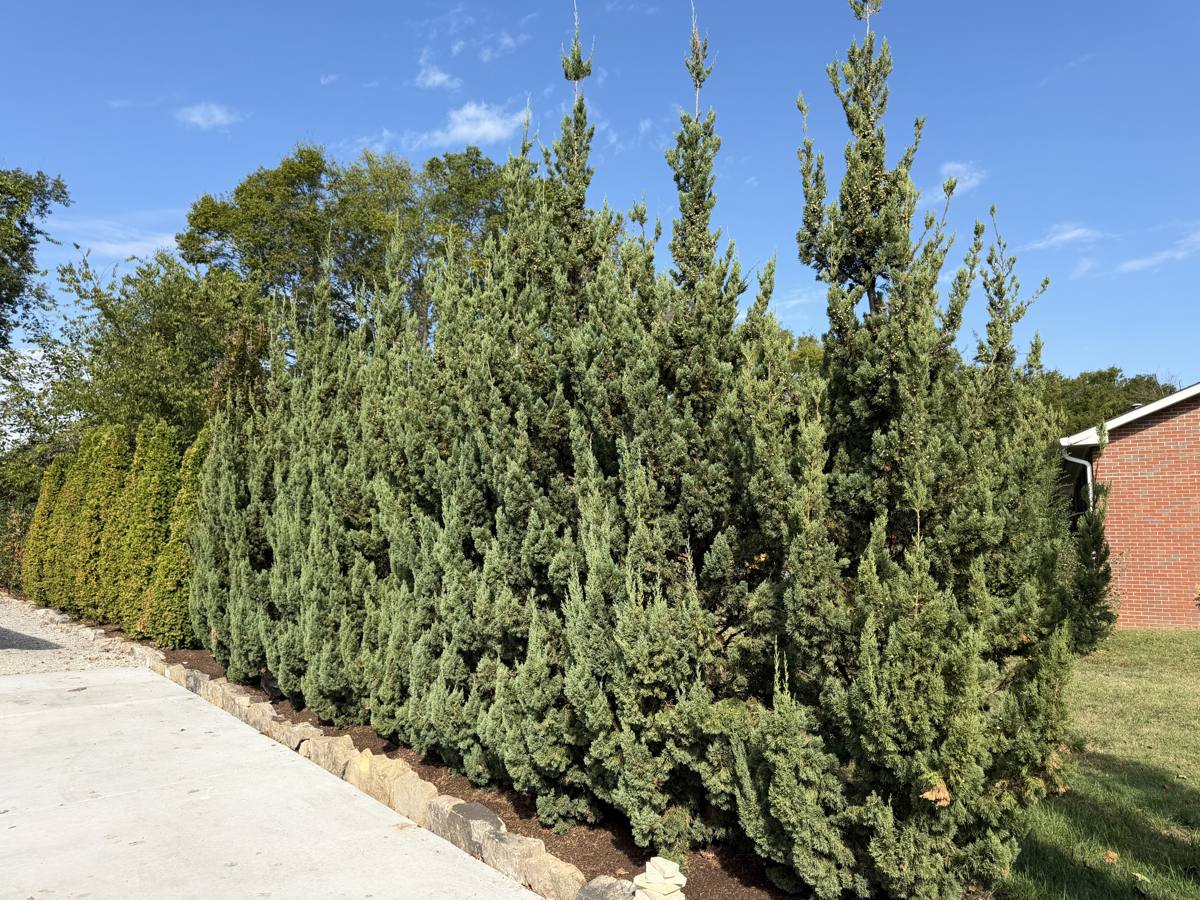
Trautman juniper (Juniperus chinensis 'Trautman')
- Size: about 10–15 ft tall, 4–6 ft wide
- Spacing for a screen: 4 ft on center
- Light: full sun, 6+ hours. It thins out in shade.
- Clay and drainage: tolerates clay as long as it drains. It is drought-tough once established and will not take standing water.
- Growth: moderate, roughly 6–18 inches a year
- Real-world caution: junipers are a favorite host for bagworms, so check every summer. Trautman is an upper-Midwest selection. Give it good air movement and drainage to handle our humidity, and use it only in real sun.
De Groot's Spire arborvitae (Thuja occidentalis 'DeGroot's Spire')
- Size: about 15–20 ft tall, only 3–5 ft wide
- Spacing for a screen: 3 ft on center
- Light: full sun to light afternoon shade
- Clay and drainage: wants moist soil that drains well. Root problems follow in heavy clay that stays wet.
- Growth: slow to moderate
- Real-world caution: bagworms are the big arborvitae pest in Tennessee. Inspect each spring and summer and pick off bags before they spread. Because it's slower, buy larger plants if you need privacy soon.
Skip laurel (Prunus laurocerasus 'Schipkaensis')
- Size: about 10–15 ft tall, 5–7 ft wide when left unpruned
- Spacing for a screen: 4–5 ft on center
- Light: full sun to part shade. It's the best of the skinny group for shadier lines.
- Clay and drainage: grows in clay but not compacted, poorly drained clay. Wet feet lead to root rot and dieback.
- Growth: moderate to fast
- Real-world caution: shot hole disease shows up as small holes in the leaves after wet springs, especially where sprinklers keep the leaves wet. Keep water off the foliage and plant in ground that drains. Skip laurel takes pruning well, so it can be trimmed to stay narrower than its natural width, which is why it earns a place in tight spaces. Leaves and seeds are toxic to pets and livestock.
Privacy Hedge Plants for Medium Property Lines (8–15 Feet)
Most Brentwood and Franklin property lines fall here: room for a real privacy hedge, but not for a row of trees that will reach 50 feet.
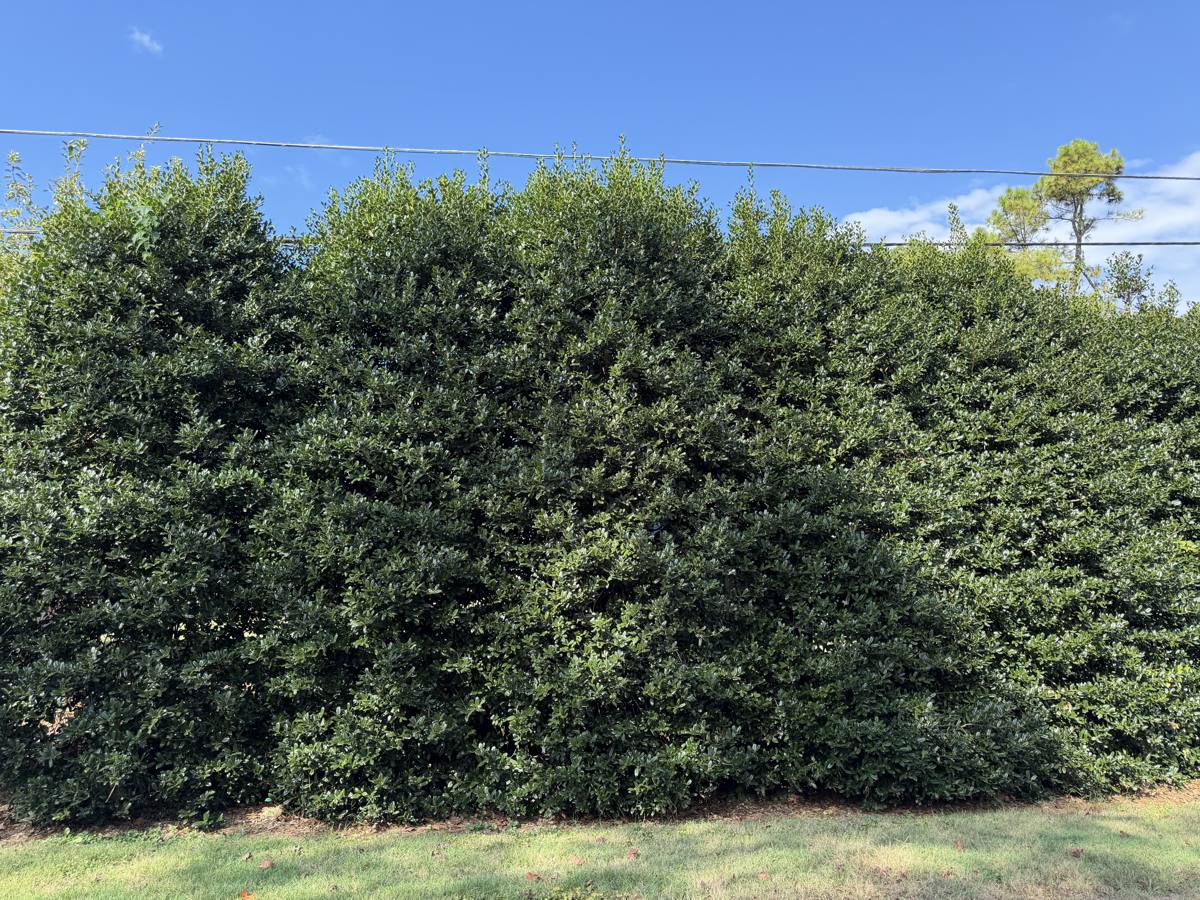
Nellie R. Stevens holly (Ilex 'Nellie R. Stevens')
- Size: about 15–25 ft tall in most landscapes (up to 30), 8–12 ft wide or more with age
- Spacing for a screen: 6–8 ft on center
- Light: full sun to part shade. Some afternoon relief helps prevent leaf scorch.
- Clay and drainage: one of the better choices for heavy clay. It handles heat and drought well, but avoid low, wet spots.
- Growth: fast for a holly, often 1–2 ft a year once established
- Real-world caution: it's a big plant. The base gets wide, so don't plant it 3 ft off a fence and expect to keep the lawn edge where it is. Watch for scale insects, and expect some yellowing of the leaves if the soil runs alkaline.
Oakleaf holly (Ilex × 'Conaf', sold as Oak Leaf™, part of the Red Holly series)
- Size: about 14–20 ft tall, 8–15 ft wide (sources vary; maturity takes 8–10 years)
- Spacing for a screen: 5–6 ft on center
- Light: full sun to part shade
- Clay and drainage: adaptable, and does fine in well-prepared clay. Water regularly the first season.
- Growth: fast
- Real-world caution: the bronze-red new growth and narrower pyramid shape set it apart from Nellie Stevens. It has fewer and softer spines, which makes it a better barrier for families with kids. In shade it gets looser and needs light shaping to stay dense. It's a newer hybrid with less long-term local track record than Nellie Stevens.
Hetz Wintergreen arborvitae (Thuja occidentalis 'Hetz Wintergreen')
- Size: about 15 ft tall and 6 ft wide at ten years, maturing to about 20–30 ft tall and 8–10 ft wide
- Spacing for a screen: 5–6 ft on center
- Light: full sun preferred, with a bit more shade tolerance than most T. occidentalis types
- Clay and drainage: tolerates clay that drains. Like any arborvitae, it struggles in soil that stays wet.
- Growth: moderate to fast, about 1–1.5 ft a year
- Real-world caution: bagworms again. Arborvitae and juniper are their preferred hosts. It also needs consistent water through its first two summers here, because summer heat stress is the most common reason new arborvitae screens thin out.
Large, Fast-Growing Privacy Trees for Wide Lots (15+ Feet)
When there's room to spread, these are the large-scale privacy trees for Middle Tennessee, including the fastest-growing option on this list.
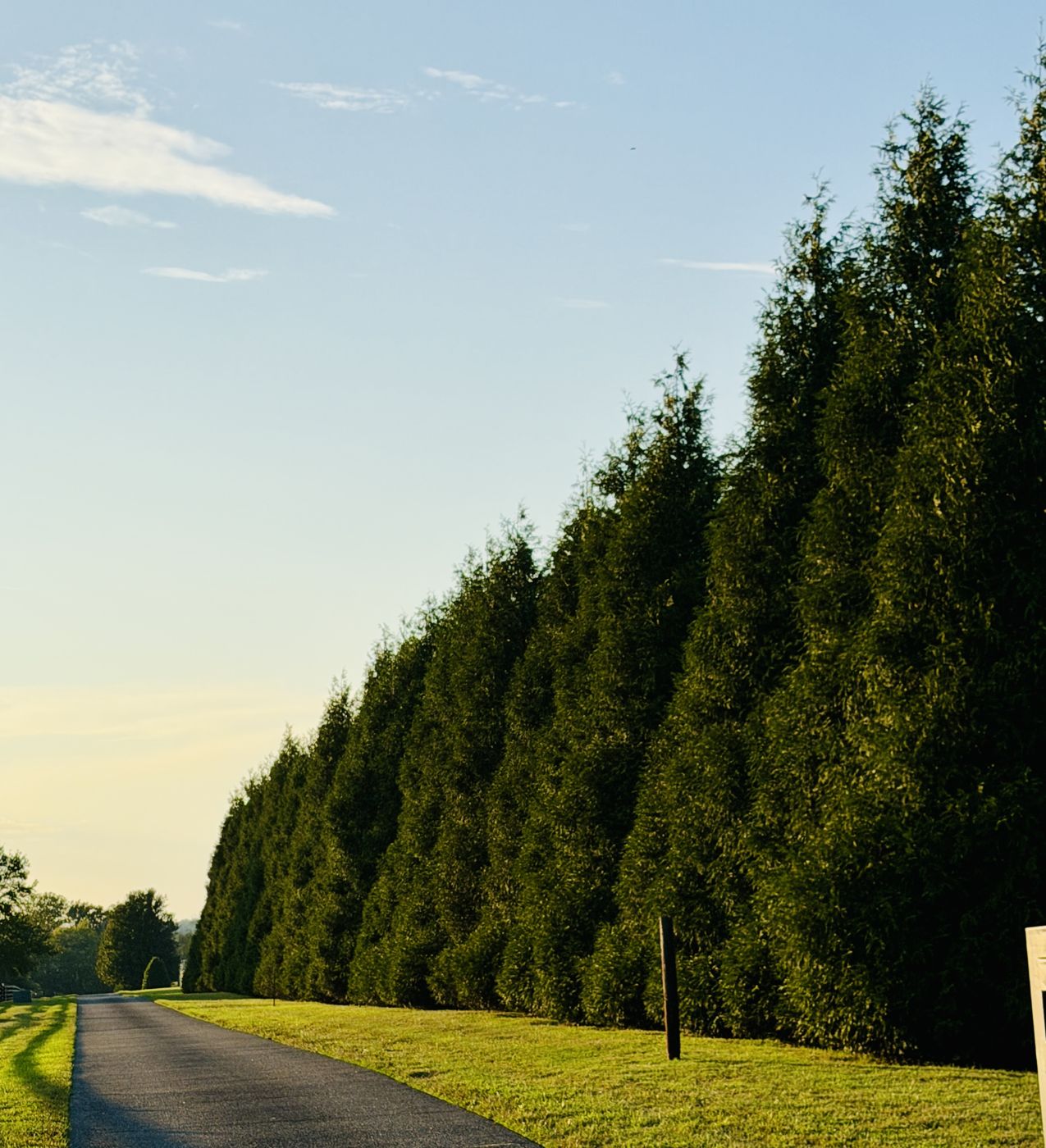
Green Giant arborvitae (Thuja standishii × plicata 'Green Giant')
- Size: about 40–60 ft tall, 12–18 ft wide
- Spacing for a screen: 10–15 ft on center. This is not a typo. They get huge.
- Light: full sun, with light afternoon shade acceptable
- Clay and drainage: tolerates a wide range of soils, including clay, but root rot follows where water sits
- Growth: fast, up to 3–4 ft a year in good conditions
- Real-world caution: width. The most common Green Giant mistake in Middle Tennessee is planting them 5 ft apart and 3 ft off a fence. Ten years later they're crowding each other, shading out the lower branches, and taking over the yard. Give them room, or choose a medium plant. Bagworms are an occasional problem.
Japanese cryptomeria (Cryptomeria japonica)
- Size: the species reaches about 50–70 ft tall and 20–30 ft wide. Cultivars such as 'Yoshino' run about 30–50 ft tall and are narrower.
- Spacing for a screen: 12–15 ft on center, staggered for a natural look
- Light: full sun to part shade
- Clay and drainage: needs good drainage. It's adaptable on soil type but not on wet feet, so raise the planting area in heavy clay.
- Growth: moderate
- Real-world caution: it needs room, and it needs drainage. It's a beautiful, softer-textured alternative to Green Giant, but it won't forgive a soggy back corner. Some types bronze in winter; 'Yoshino' holds its green better.
Southern magnolia (Magnolia grandiflora)
- Size: the species can reach 60–80 ft. 'Bracken's Brown Beauty' is a more compact, cold-hardy selection, about 30–50 ft tall and 15–30 ft wide. 'Little Gem' is much smaller and slower, about 15–20 ft tall and 8–10 ft wide over 20 years.
- Spacing for a screen: 'Bracken's Brown Beauty' 12–15 ft on center. 'Little Gem' 8–10 ft (it can also work as a medium screen).
- Light: full sun to part shade
- Clay and drainage: prefers moist, rich, well-drained soil. It dislikes both soil that stays wet and soil that dries out completely.
- Growth: moderate for 'Bracken's', slow for 'Little Gem'
- Real-world caution: leaf litter falls in spring and fall, and very little grows in the dense shade underneath, so plan the ground plane around that from day one. In a hard Zone 7a winter, 'Little Gem' may drop some leaves.
Privacy Tree Size and Spacing Chart
| Category | Plant | Mature height | Mature width | Screen spacing |
|---|---|---|---|---|
| Skinny | Trautman juniper | 10–15 ft | 4–6 ft | 4 ft |
| Skinny | De Groot's Spire arborvitae | 15–20 ft | 3–5 ft | 3 ft |
| Skinny | Skip laurel (trimmed narrow) | 10–15 ft | 5–7 ft | 4–5 ft |
| Medium | Nellie R. Stevens holly | 15–25 ft (to 30) | 8–12 ft+ | 6–8 ft |
| Medium | Oakleaf holly ('Conaf') | 14–20 ft | 8–15 ft | 5–6 ft |
| Medium | Hetz Wintergreen arborvitae | 20–30 ft | 8–10 ft | 5–6 ft |
| Large | Green Giant arborvitae | 40–60 ft | 12–18 ft | 10–15 ft |
| Large | Japanese cryptomeria | 30–70 ft (by cultivar) | 20–30 ft | 12–15 ft |
| Large | Southern magnolia ('Bracken's Brown Beauty') | 30–50 ft | 15–30 ft | 12–15 ft |
Privacy Trees FAQ: Middle Tennessee
How far apart should you plant Green Giant arborvitae for privacy?
Plant Green Giant arborvitae 10–15 feet apart on center. They reach about 40–60 feet tall and 12–18 feet wide, so planting them 5 feet apart and 3 feet off a fence leads to crowding, shaded-out lower branches, and trees that take over the yard. If you don't have 15 feet or more of width, choose a medium plant such as Nellie R. Stevens holly or Hetz Wintergreen arborvitae.
What are the best privacy trees for Middle Tennessee?
It depends on how much width you have. For skinny spaces of 3–6 feet: Trautman juniper, De Groot's Spire arborvitae, or skip laurel trimmed narrow. For medium spaces of 8–15 feet: Nellie R. Stevens holly, Oakleaf holly, or Hetz Wintergreen arborvitae. For large spaces of 15 feet or more: Green Giant arborvitae, Japanese cryptomeria, or Southern magnolia. In every case, match the plant to the light and make sure the clay drains.
What is the fastest-growing privacy tree in Tennessee?
Green Giant arborvitae is the fastest on this list, growing up to 3–4 feet a year in good conditions, but it needs a wide space. For medium spaces, Oakleaf holly is fast and Nellie R. Stevens is fast for a holly, often 1–2 feet a year once established. Skip laurel is moderate to fast for skinny spaces.
What privacy trees grow well in clay soil?
Nellie R. Stevens holly is one of the better choices for heavy clay. Trautman juniper, Oakleaf holly, Hetz Wintergreen, and Green Giant arborvitae all tolerate clay as long as it drains. No screening plant on this list does well where water sits. Dig a hole about 12 inches deep, fill it with water, and if it's still holding water the next day, fix the drainage or raise the planting area first.
What privacy plants grow in shade?
Of the narrow options, skip laurel handles shade best; it grows in full sun to part shade. Nellie R. Stevens holly, Oakleaf holly, Japanese cryptomeria, and Southern magnolia also take part shade. Trautman juniper needs six or more hours of direct sun and thins out in shade.
Plan a Privacy Screen for Your Franklin or Brentwood Home
The right screen is the one matched to your light, your width, and your soil. If you're in Brentwood, Franklin, or anywhere in Middle Tennessee and want a screen designed around your property instead of a one-size hedge, Hewitt Landscape Services can help. John and the crew focus on design, planting, and the plant knowledge that keeps a screen healthy for decades.
Browse recent projects on Instagram at @hewittlandscapes, then request a design consult through hewittlandscapetn.com. We'll walk the line with you, measure what you actually have, and pick plants that will still look right in ten years.